Chunmee tea (眉茶, méi chá, literally “eyebrow tea”) derives its name from the distinctive curved, eyebrow-like shape of its processed leaves. Unlike the pellet shape of Gunpowder tea, Chunmee leaves are twisted into long, slender strips with a slight arch — a shape that Chinese tea masters have likened to the elegant eyebrows of a classical beauty.
The origin story of Chunmee tea stretches back to the Tang and Song dynasties (7th-13th centuries), when it was reportedly presented as tribute tea to the imperial court. However, its modern identity as an export product was forged in the 19th and 20th centuries, when European and Middle Eastern traders developed a strong preference for its balanced, slightly tart flavor profile — distinct enough to be interesting, but approachable enough for daily consumption.
In 2024, China exported 56,763 tonnes of tea in just the first two months of the year, with Chunmee tea accounting for a significant share alongside Gunpowder. What makes Chunmee so remarkable is not its price per kilogram — which typically falls in the $2.80-$4.50/kg range for standard export grades — but its extraordinary market stability. While other tea categories experience volatile demand shifts driven by trends and influencer culture, Chunmee tea is consumed daily by millions of people who view it as an essential household staple, not a luxury purchase.
For importers building a resilient tea portfolio, understanding Chunmee tea is as important as understanding Gunpowder — arguably more so, because Chunmee’s grading system is more nuanced, its quality indicators more subtle, and its market opportunities more diverse.
Where Chunmee Tea Comes From?
– Zhejiang Province: The dominant producing region, particularly Shaoxing, Chun’an, and the surrounding areas. Zhejiang Chunmee tea benefits from established export infrastructure, experienced processors, and proximity to major ports (Ningbo, Shanghai).
– Anhui Province: Huangshan and surrounding areas produce Chunmee with slightly different flavor characteristics — often described as more floral and less smoky than Zhejiang Chunmee tea.
– Jiangxi Province: Wuyuan and surrounding areas produce smaller volumes of high-quality Chunmee tea, often organic-certified.
Factory Selection Criteria:
1. Export License: Verify that the factory holds valid import-export rights and relevant certifications (HACCP, ISO 22000 for food safety).
2. Certifications: Depending on your market, you may need EU Organic, USDA Organic, Rainforest Alliance, Fairtrade, or other certifications. Verify certification scopes match your products.
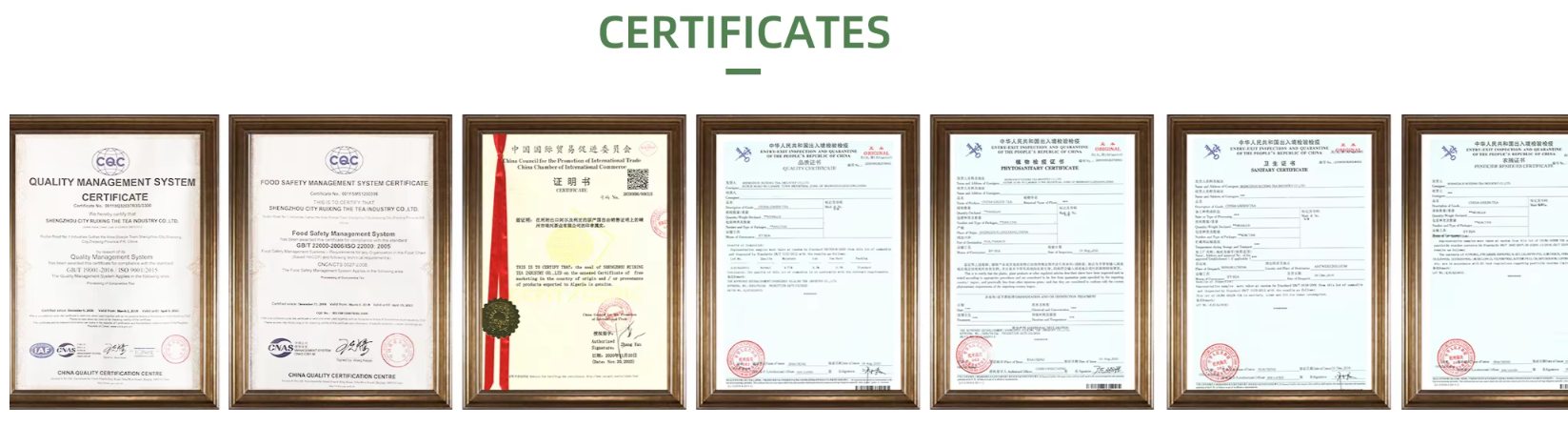
3. Quality Control Infrastructure: Professional factories should have in-house testing labs for moisture content, pesticide residues, and microbiological testing.
4. Production Capacity: For container-scale orders (20+ tonnes), ensure the factory can fulfill within a single production batch for consistency
5. Sample History: Request samples from at least three different production batches — not just the best batch. Consistency across batches tells you more than perfection in a single sample.
Logistics Considerations:
– Sea freight: Standard 20-foot container holds approximately 10-12 tonnes of tea (depending on packaging density). Transit time to Casablanca: 45-60 days; to France: 30-55 days.
– Rail freight: Growing option for Central Asian destinations. Yiwu-Tashkent rail corridor: approximately 12-25 days.

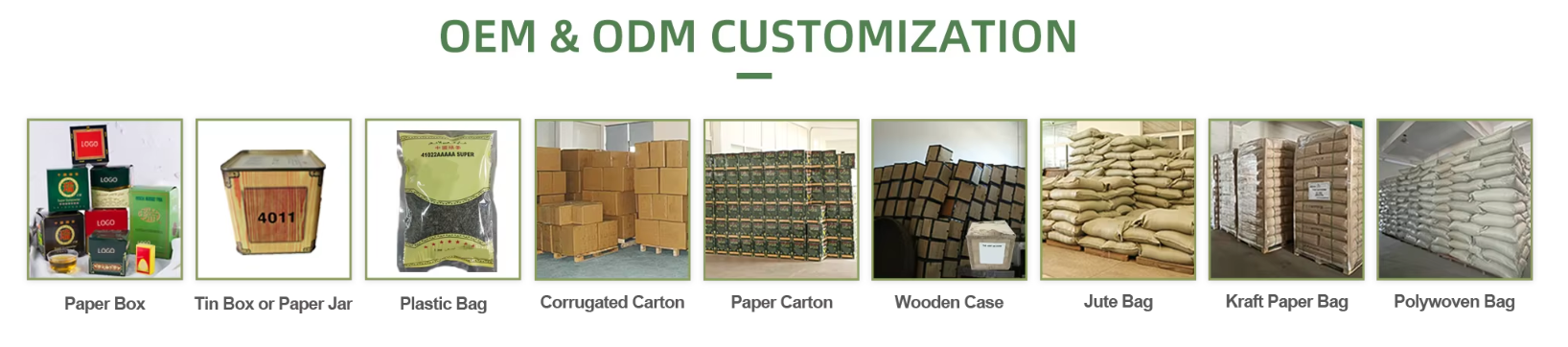
– Packaging formats: Standard export packaging is 25kg-50kg kraft paper sacks with inner aluminum foil lining. Retail-ready packaging (tins, boxes) can be arranged at source for cost efficiency.