If you have ever sourced green tea from China, you have almost certainly encountered the alphanumeric codes that define Gunpowder tea grades. To the uninitiated, strings like “3505AAA” or “9375” might look like factory inventory numbers. In reality, they are the key to understanding what you are buying — and how much you should be paying.
This guide breaks down the Gunpowder tea grading system from a B2B buyer’s perspective. Whether you import for a supermarket chain in Europe, blend mint tea for the North African market, or stock specialty loose-leaf tea in the Middle East, understanding these grades will help you make smarter purchasing decisions.
1. What Is Gunpowder Tea?
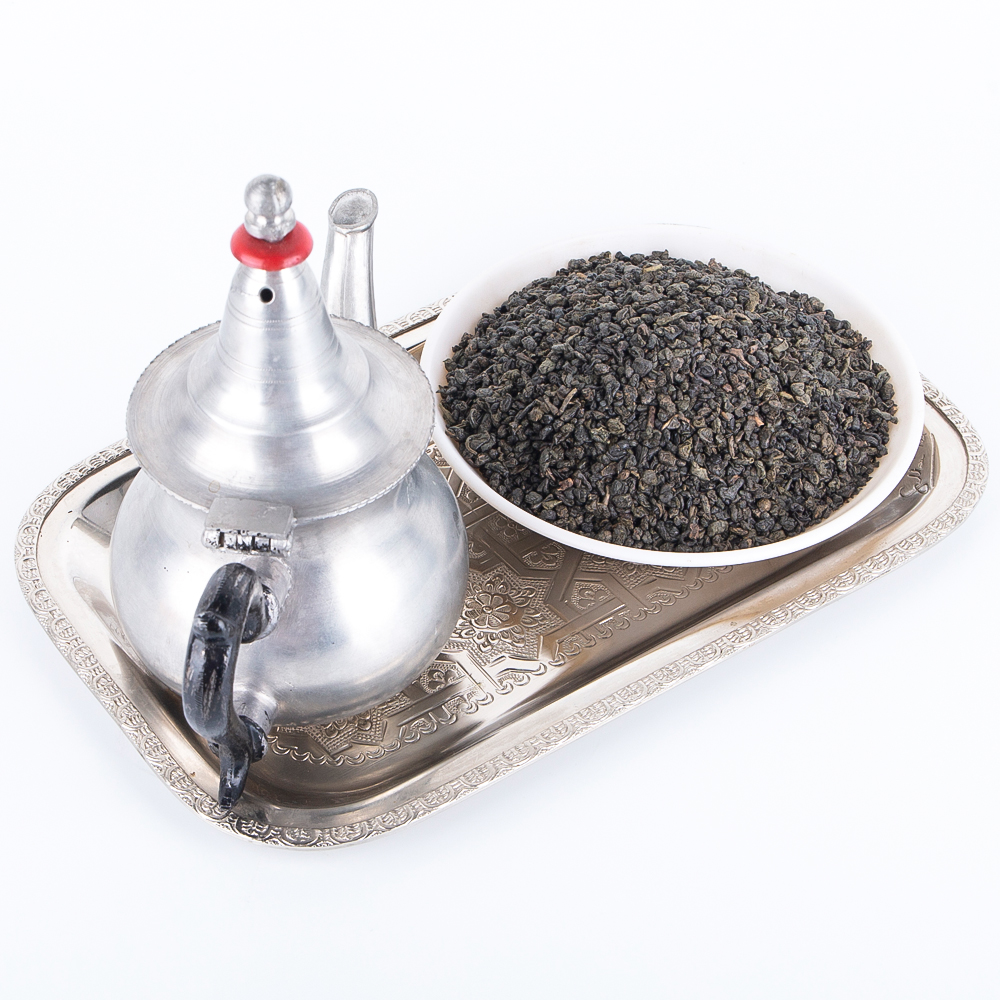
Gunpowder tea (Chinese: 珠茶, literally “pearl tea”) is a type of pan-fired green tea in which the leaves are rolled into small, dense pellets that resemble grains of gunpowder. The name dates back to 18th-century British tea traders, who noted the visual similarity between the tightly rolled leaves and actual gunpowder pellets used in firearms at the time.
The tea traces its origins to Zhejiang Province in eastern China, with Pingshui (平水) in Shaoxing recognized as the historical production center. As early as the Tang Dynasty (618–907 AD), Zhejiang was producing compressed tea cakes for transport along the Silk Road. The pellet-rolling technique was perfected during the Ming Dynasty (1368–1644), when loose-leaf tea became the dominant form of consumption in China.
What makes Gunpowder tea distinctive is the rolling process. After pan-firing (kill-green), the leaves are mechanically rolled under pressure into tight spheres. This compression serves three purposes. It preserves freshness by reducing the leaf surface area exposed to air. It makes the tea exceptionally dense, allowing shippers to pack more weight into less volume — a critical advantage for 19th-century maritime trade. And it creates a slow, controlled unfurling during brewing, which releases flavor in layers rather than all at once.
Today, Gunpowder tea accounts for a significant share of China’s green tea exports. The largest import markets include Morocco, Algeria, Libya, Senegal, and Mauritania in North and West Africa; Uzbekistan in Central Asia; and Spain, France, and Belgium in Europe. For many of these markets, Gunpowder tea is not a specialty product — it is a daily staple.
2. Understanding the Grading System
The international grading system for Gunpowder tea was standardized by Chinese state-run export agencies in the mid-20th century. The codes you see on commercial invoices — 3505, 9375, 9475, etc. — are not arbitrary numbers. They are trade designations that communicate specific quality parameters.
2.1 What the Numbers Actually Mean
The numbering system reflects two primary variables:
- Pellet size: Smaller numbers generally indicate smaller, more tightly rolled pellets made from younger leaves.
- Leaf quality: The raw material grade — bud-to-leaf ratio, harvest season, and leaf tenderness.
The “AAA” suffix on grades like 3505AAA represents a further quality stratification within the same pellet size category. Think of it as: same model, premium trim level.
2.2 Core Grading Factors
Professional tea graders evaluate Gunpowder tea across five dimensions:
| Factor | What to Look For | Indicator of Quality |
|---|---|---|
| Pellet Size | Consistent, uniform pellets | Smaller = younger leaves, more skilled rolling |
| Tightness | Dense, hard-to-crush pellets | Proper compression during processing |
| Color | Deep jade-green with a slight luster | Freshness and well-preserved essential oils |
| Aroma | Fresh, slightly sweet, vegetal with faint smokiness | Proper firing without scorching |
| Liquor | Bright yellow-green, clear | Clean processing, no contaminants |
A yellowish or grayish hue in the dry leaf signals age or improper storage. A dusty, flat aroma suggests stale product. Broken pellets or inconsistent sizing point to lower-grade raw material or careless processing.
3. Gunpowder Tea Grade Breakdown
Below is a detailed breakdown of the most commonly traded grades, organized from highest to lowest.
3.1 Grade 3505AAA — “Pinhead” (Top Premium)
This is the pinnacle of Gunpowder tea. The pellets are exceptionally small — approximately 1–2mm in diameter — perfectly round, and gleaming with a dark jade-green sheen. Made from the earliest spring harvest using only the youngest buds and leaves, Pinhead Gunpowder is the benchmark against which all other grades are measured.
Sensory Profile: Nutty and sweet with a remarkably smooth, full-bodied mouthfeel. Minimal astringency. The aftertaste is long and clean — what Chinese tea masters call hui gan (returning sweetness).
Best For: Premium loose-leaf retail, high-end food service, specialty tea shops, and markets where consumers are willing to pay for quality differentiation.
Price Position: 2–3× the cost of standard grades. Minimum order quantities are typically higher, and availability is seasonal.
3.2 Grade 3505A — “Premium”
A step below Pinhead, with pellets measuring approximately 2–3mm. Still tightly rolled and uniform, but using a slightly broader leaf selection that includes the bud and the first two leaves.
Sensory Profile: Rich and toasted with balanced astringency. The liquor is bright golden-green, and the flavor holds up well to multiple infusions. More robust than 3505AAA while retaining refinement.
Best For: Mid-to-premium retail brands, high-quality tea bag production, and hospitality markets. The most popular premium grade in European tea houses.
3.3 Grade 3505B / 3505C — “Upper Standard”
These grades use larger pellets (approximately 3–4mm) and can include leaves from later harvests. The rolling tightness is slightly reduced, and pellet uniformity begins to show more variation. Still well within acceptable quality parameters for most commercial applications.
Sensory Profile: Fuller body with more pronounced vegetal and slightly smoky notes. Higher astringency than premium grades, but still smooth enough for daily drinking.
Best For: Mainstream retail packaging, mid-range food service, and private-label supermarket brands. Offers a strong quality-to-cost ratio.
3.4 Grade 9375 — “Standard”
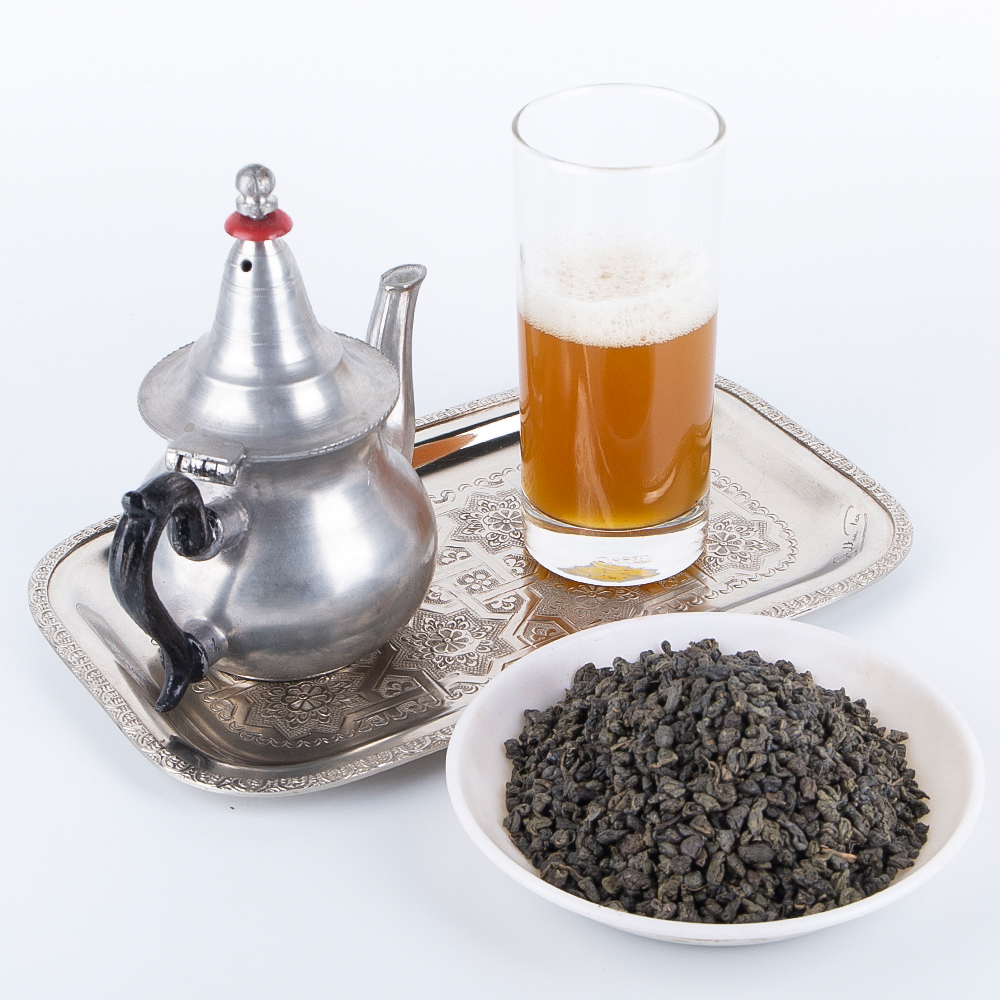
The workhorse of the Gunpowder tea trade. Pellets are approximately 4–5mm, visibly larger and less uniformly rolled than the 3505 series. This is the grade most commonly associated with the North African mint tea tradition.
Sensory Profile: Strong, assertive, and distinctly astringent. The flavor is bold enough to stand up to generous amounts of fresh mint and sugar. Produces a darker, amber-tinged liquor compared to higher grades.
Best For: Mint tea blending (Morocco, Algeria, Tunisia), economical retail bags, and markets where a strong, brisk cup is preferred. Single-largest volume grade in global Gunpowder tea trade.
3.5 Grade 9475 — “Economy”
Pellets exceed 5mm, with an open, sometimes irregular roll. Made from larger, more mature leaves harvested later in the season. Color tends toward a yellowish-green rather than the deep jade of premium grades.
Sensory Profile: Coarse, bitter, and flat, with none of the layered complexity of higher grades. The aftertaste is short and sometimes harsh.
Best For: Price-sensitive markets, industrial tea extraction, and applications where tea is a background ingredient rather than the star. Not recommended for retail loose-leaf.
3.6 Grade Comparison at a Glance
| Grade Code | Market Name | Pellet Size | Flavor Profile | Primary Markets |
|---|---|---|---|---|
| 3505AAA | Pinhead | ~1–2mm | Nutty, smooth | Premium retail, EU/US specialty |
| 3505A | Premium | ~2–3mm | Rich, toasted, balanced | Mid-premium retail, EU hospitality |
| 3505B/C | Upper Standard | ~3–4mm | Vegetal, slight smokiness | Mainstream retail, private label |
| 9375 | Standard | ~4–5mm | Strong, astringent, bold | North African mint tea, bulk |
| 9475 | Economy | >5mm | Coarse, flat | Industrial, extreme price sensitivity |
4. Choosing the Right Grade for Your Market
Grade selection should be driven by three factors: your target consumer, your price point, and your format.
4.1 Market-Specific Preferences
North Africa (Morocco, Algeria, Libya): The 3505AAA-D grade dominates. Consumers here brew Gunpowder tea with fresh mint and sugar, and the bold, astringent base is essential for cutting through the sweetness. Anything too smooth or delicate gets lost. Strong, dark brews preferred.
West Africa (Senegal, Mauritania, Mali): Similar to North Africa, but with even greater price sensitivity. 3505 and sometimes 3505D are the standard. Mint tea rituals are deeply cultural, and volume matters more than refinement.
Europe (Belgium, France, Spain): A bifurcated market. Health-conscious consumers and specialty tea shops demand 3505A and above, with organic certification increasingly becoming a requirement. Supermarket and private-label segments work well with 3505 and 9375 grades. Cold-brew Gunpowder tea is an emerging trend in this region.
Middle East (UAE, Saudi Arabia, Kuwait): Preference for 3505AAA and 3505A in premium retail, with 9375 serving the food service and catering sector. Consumers in the Gulf states often have higher disposable income and are willing to pay for visible quality.
Central Asia (Russia, Uzbekistan): Price-driven. 9501 and 9475 grades, often sold in large-format bulk packaging.
4.2 Format Considerations
- Loose-leaf retail: 3505AAA or 3505A. Visual appearance matters — consumers judge with their eyes first.
- Tea bags: 3505B or 9375. Pellet size needs to work within bag dimensions, and cost-per-cup is critical.
- Mint tea blends: 9375 exclusively. The grade was practically designed for this application.
- Ready-to-drink / extraction: 9475. Flavor defects are masked by other ingredients, and cost is everything.
5. Quality Red Flags: What to Watch For
Even within the same grade code, quality can vary significantly between suppliers. Here is what professional buyers should check:
- Inconsistent pellet size within a batch: Indicates poor sorting or mixing of harvests.
- Excessive broken pellets and dust at the bottom of the bag: A sign of rough handling, age, or both.
- Yellowish-gray coloration: Old stock or improper storage (exposure to heat and moisture).
- Flat, musty aroma: Stale tea or mold contamination from excessive moisture during transport.
- Lack of luster on pellet surface: Essential oils have oxidized; freshness is compromised.
- Excessive stem or non-tea material: Poor sorting and low production standards.
Always request a pre-shipment sample and cup it yourself. Photographs are not enough. The brewing test reveals everything that grading codes cannot.
6. Sourcing Gunpowder Tea from China
6.1 The Zhejiang Advantage
Zhejiang Province remains the world’s premier Gunpowder tea production region. The combination of subtropical climate, mountainous terrain, and centuries of accumulated processing expertise creates a terroir that cannot be replicated elsewhere. Factories in Shaoxing, Ningbo, and Jinhua produce the bulk of China’s Gunpowder tea exports.
6.2 Certification and Compliance
For European and North American buyers, certifications are non-negotiable. Look for suppliers who can provide:
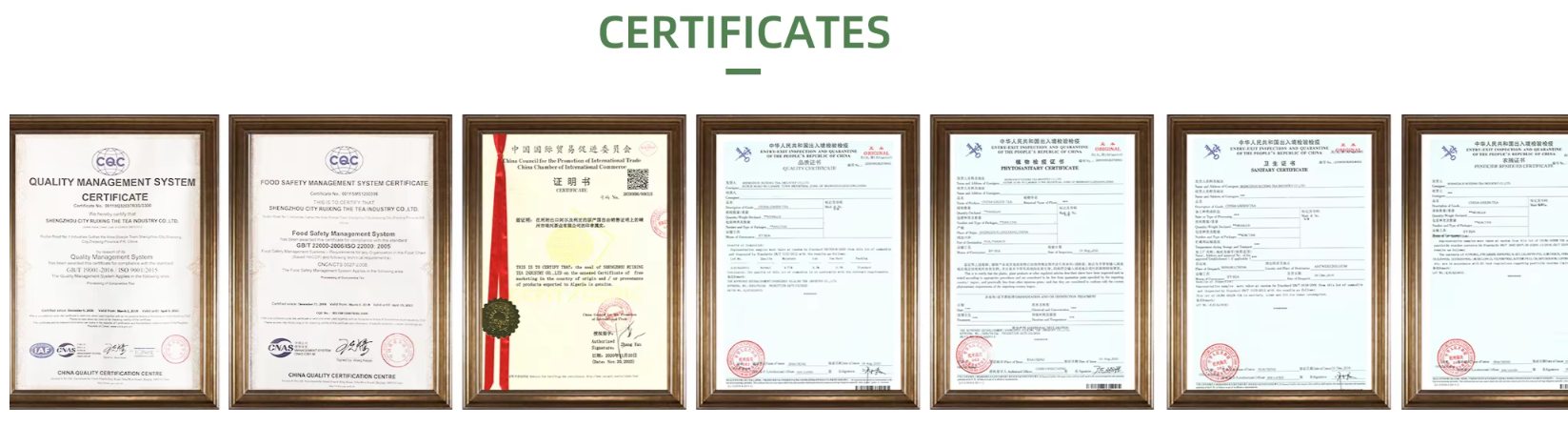
- ISO 9001 / HACCP: Basic food safety and quality management.
- EU Organic / USDA Organic: Required for organic-label products in their respective markets.
- Eurofins / SGS test reports: Pesticide residue testing against EU MRL standards (particularly important after the EU increased scrutiny on anthraquinone residues from coal drying).
- Rainforest Alliance / Fair Trade: Value-added certifications for premium positioning.
6.3 Why Buy Factory Direct
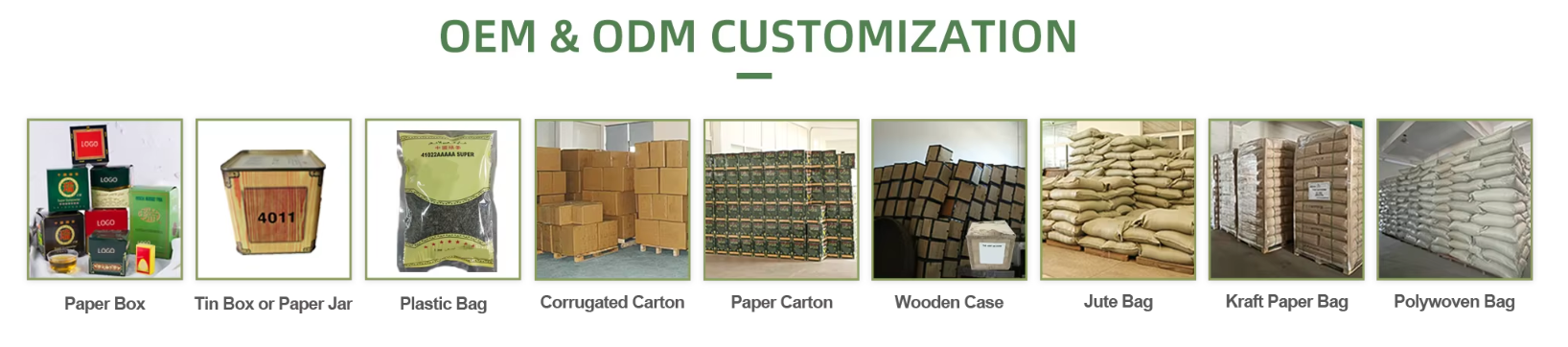
Working directly with a Zhejiang-based producer eliminates middlemen, reduces cost, and gives you control over quality specifications. A factory-direct relationship means you can customize grades, packaging, and blends to your market’s exact requirements — rather than settling for whatever the trader has in stock.
Contact us to request samples, discuss specifications, or receive a quotation for your market.